The Terror of Being Transported from Burlington to Hanscom
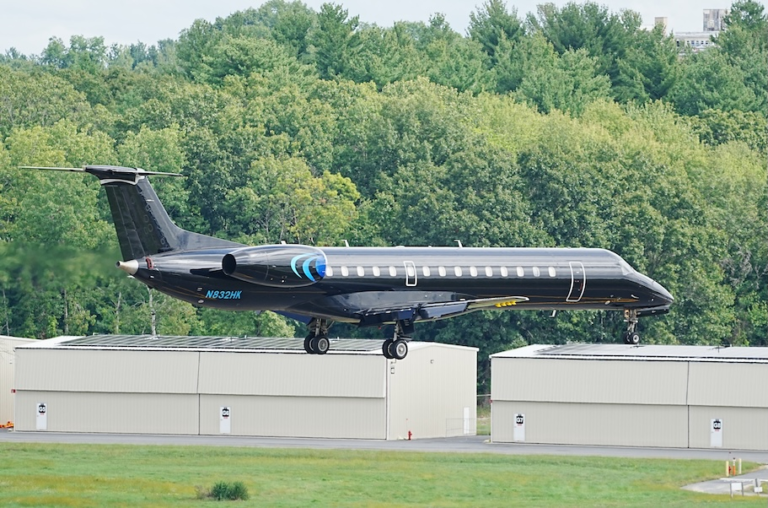
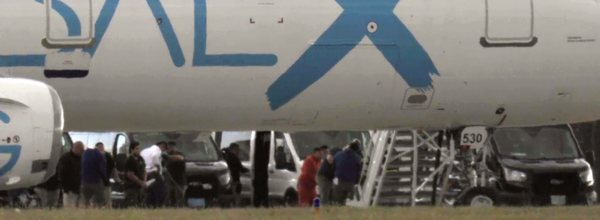
Three times a week, detainees from Massachusetts and other New England states are shackled, driven to Hanscom Field in Bedford, and loaded on prison transports to be flown to ICE’s Alexandria prison complex in Louisiana. Our observers document the flights and count the number of detainees, but we do not know their stories. Most detainees cannot speak freely and live in fear of retaliation by ICE. So it is rare to get a publicly documented story of what actually happens when people are taken from Burlington to Hanscom, forcibly removed from Massachusetts, away from their lawyers and families.
This is the sworn testimony of Sonia Yamileth Reyes Arauz, now free and protected by a writ of habeas corpus that prevents ICE from detaining or arresting her until her asylum case is ultimately decided.
On the night of January 22, about seventy-five women were locked in a single room at the ICE facility on District Avenue in Burlington. There was one exposed toilet and not enough space to sit down. Seven women fainted. Three were taken to the hospital. We know what happened in that room because Sonia Reyes Arauz described it in a sworn declaration filed in federal court.
Sonia is 47. She was born in Honduras and came to the United States seeking protection. She survived years of childhood abuse, and more recently received death threats after a family member was killed. An asylum officer rejected her fear of returning. An immigration judge overturned that rejection. She was waiting for a hearing that was never scheduled. Before ICE detained her, she was the primary caretaker for her adult son, who has schizophrenia and the mental state of a young child. “I wish deeply to be able to return to all of my children,” she wrote, “but especially my son with schizophrenia so I can protect him and care for him again.”
On January 22, with about ten minutes’ notice, ICE removed twenty-three women from the Cumberland County Jail in Maine. “They put handcuffs on our wrists and feet and chains around our waists,” Sonia declared. “The handcuffs were very tight and it hurt. It pinched my wrist and it still hurts me now. I still have marks on my wrists.” In the van, the officers turned the heat up high. One woman fainted. “We yelled at the officials to stop driving because a woman fainted, but they did not respond and did not stop driving. They didn’t give us water or anything.”
They arrived in Burlington around 10:30 that night. The room the women were put in was already full. “There were in my estimation around 75 women inside and it was too much,” Sonia wrote. “There was not even enough space for us to sit down. We had to take turns sitting.” The single toilet overflowed. The room was suffocatingly hot, and the officers refused to open the door, saying there was an order that it stay closed. When the women warned that a woman with epilepsy needed help, Sonia says an official answered, “I don’t care.” When they said they were suffocating, an official told them in Spanish, “no, it doesn’t matter, we are just doing our job, and we can’t open the door.” “The ICE officials told us that if we didn’t shut up, we were going to have serious problems,” she wrote. “They treated us like animals.”
In total, 7 women in our holding cell fainted that night from the heat and stress of us all being packed into a tiny space where there wasn’t even room for everyone to sit down or to breathe. I later found out that three people in the cell were taken to the hospital. I did not sleep all night. It would have been impossible to sleep because of the horrible heat, the smell, and because I had [to] stand for most of the night. The bright lights were on all night. I was shocked at how terribly we were treated. I did not imagine anything like this in the United States.
The next morning, January 23rd:
The officials took us out of the cell at around 9 in the morning. We said we were hungry and all they gave us was a bottle of water.
They loaded us on to a bus in chains and we were waiting on the bus in Burlington for about 2 hours. Once again, they put the heat on very high, and it was so hot. It was difficult to breathe. Then, we drove to the airport where we had to wait on the bus for another hour and a half, still with the heat on high. They finally loaded us on to the plane, still chained at our wrists, waist and feet. That whole time, we were never allowed to use the bathroom. We waited on the plane another hour until it finally took off. We were still in our chains on the plane, and they still did not let us use the bathroom once we were in the air. We were desperate to use the bathroom. We were terrified because we didn’t know where we were going. We were hungry because we were given nothing to eat.
On the plane, we were still wearing handcuffs and chains. We didn’t know where we were being flown to. We didn’t know if we were being deported or would ever see our families again. People requested to use the bathroom and the ICE officials on the plane did not let them. One woman who had been with me at Cumberland had a lot of health concerns could not hold it in and peed on herself on the plane. Another woman that had been with me at Cumberland started vomiting a lot and asked the ICE officials for a bag, but they did not give her one. She asked the ICE officials to please take off the chains because she was very sick but they said no. Eventually, she started vomiting blood. After a lot of time passed, they finally agreed to take off the chains, but she looked really bad.
I felt awful on the plane. I had to use the bathroom very badly and I couldn’t take it. I was really stressed. After being in the air for about 3 hours, they finally let us use the bathroom.
When we arrived in Louisiana and I got off the plane, I started vomiting. I hadn’t eaten so I was vomiting yellow water. The officials didn’t ask me if I was ok or anything. They brought us to a room in the airport and we were kept there for about 4 hours. At that point, the only food they had given us all day was water and one apple. On the plane, some people got a bag that also had chips in it, but I did not get that. One of the women I was with started screaming that we were hungry and finally, an official brought us some bread and potato chips while we were waiting. Around 10 or 11 at night, they took us out of the airport and loaded us on a bus.
Sonia also said that after arriving in Louisiana and waiting to be processed, they were not fed until noon the next day, about 43 hours after they had been taken from Maine. During this time she had three bottles of water and one apple.
Massachusetts cannot allow this terror to continue in any area under state jurisdiction. ICE deliberately creates terror by not telling people where they are being taken, threatening to immediately deport them, and abusing them while in custody and during transport. It is more important than ever that we force our state leaders to acknowledge the human terror being propagated in our own communities, and take all measures to stop it.
While writing this story, we have word of a new ICE shooting in Biddeford, Maine today, July 13th. A Colombian man with a social security number, a valid work permit, and permission to work in the United States was shot and killed by ICE agents. This follows the shooting last week of a Mexican national in Houston by ICE. ICE is an out-of-control terror organization, and we need to rip it out completely and re-organize immigration enforcement. ICE terror agents cannot roam the country armed like SWAT teams if we are to live in a civil society rather than a warlord gang state.