blog

regular posts

  • Building the Resistance, One Circle of Trust at a Time

    Toby Sackton at First Parish Wayland: Why Movements Are Built on Trust, Not Leaders.

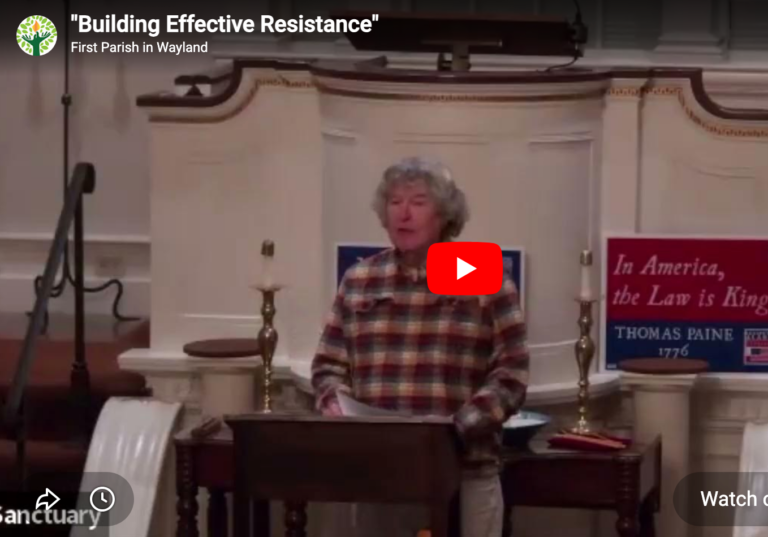
    In a talk at First Parish in Wayland in March, Toby Sackton gave what might be the most complete account yet of why this moment demands something different from conventional politics and what Lexington Alarm has been building since Patriots Day 2025.

    The talk, titled “Building Effective Resistance,” was part history, part organizing theory, part urgent call to action. Sackton began with the personal. “I have been an activist since the 1960s,” he told the room. “When the war in Ukraine started, I was glued to the news every day. Gaza was worse. When Trump was reelected, it was another shock. Truly, the world was coming apart. I doom scrolled. I read every atrocity from doge, the attack on science every firing, every attack on immigrants and Black people.”

    What broke the spiral, he said, was not a policy win or an electoral outcome it was human connection. “When a group of us founded Lexington Alarm one year ago, for the first time since the Vietnam era, I felt part of this broad network of people, a movement, that had majority support, all working towards a rough common vision grounded in the ideas of equality and the promise of what America could be.”

    Sackton started with a diagnosis. “Since the beginning of 2025, the laws and traditions that have shaped the last hundred years of our history have been violently attacked.

  • The March 28 Debrief: What We Got Right and What We Fix Next

    A few days after the No Kings rally in Lexington, Lexington Alarm held a debrief session to gather reactions. There were several successes and a few things to change before our next event.

    At a post-event debrief on Zoom, organizers, marshals, volunteers, and participants went through the rally piece by piece. The consensus: it was a success. Nearly 2,000 people attended, more signs were sold than at the 6,000-person October rally, and close to 100 new contacts signed up at the tables. The mood among volunteers was described repeatedly as “uplifting.” The table setup was the best yet — positioned closer to the crowd than in October, generating real conversations, sign sales, and genuine engagement with organizational literature.

  • |

    The Speeches of Lexington No Kings Day, March 28

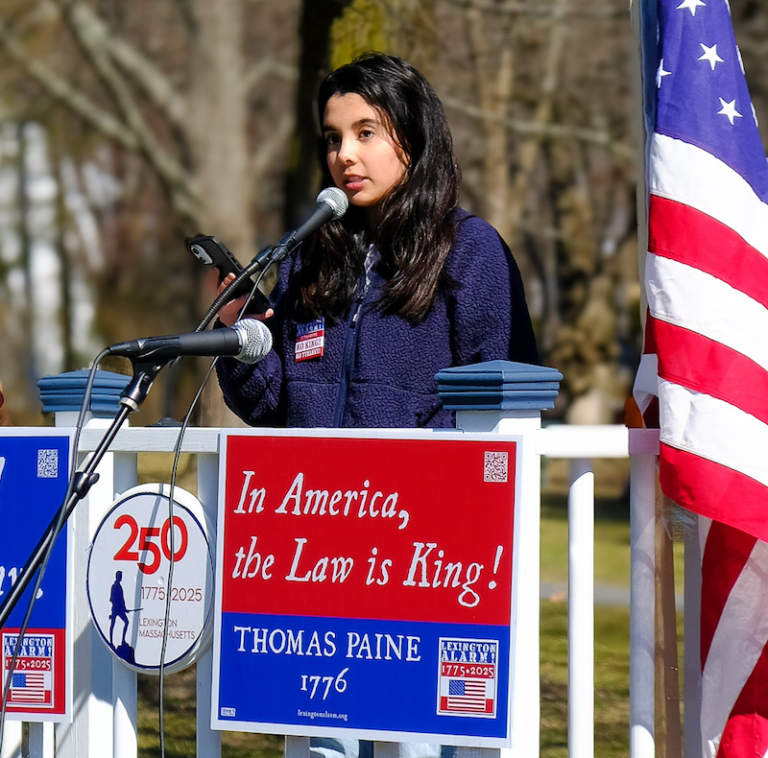
    photo by Sasha Patkin: Ayla Modirzadeh-March, LHS Junior, Speaking at No Kings Day in Lexington

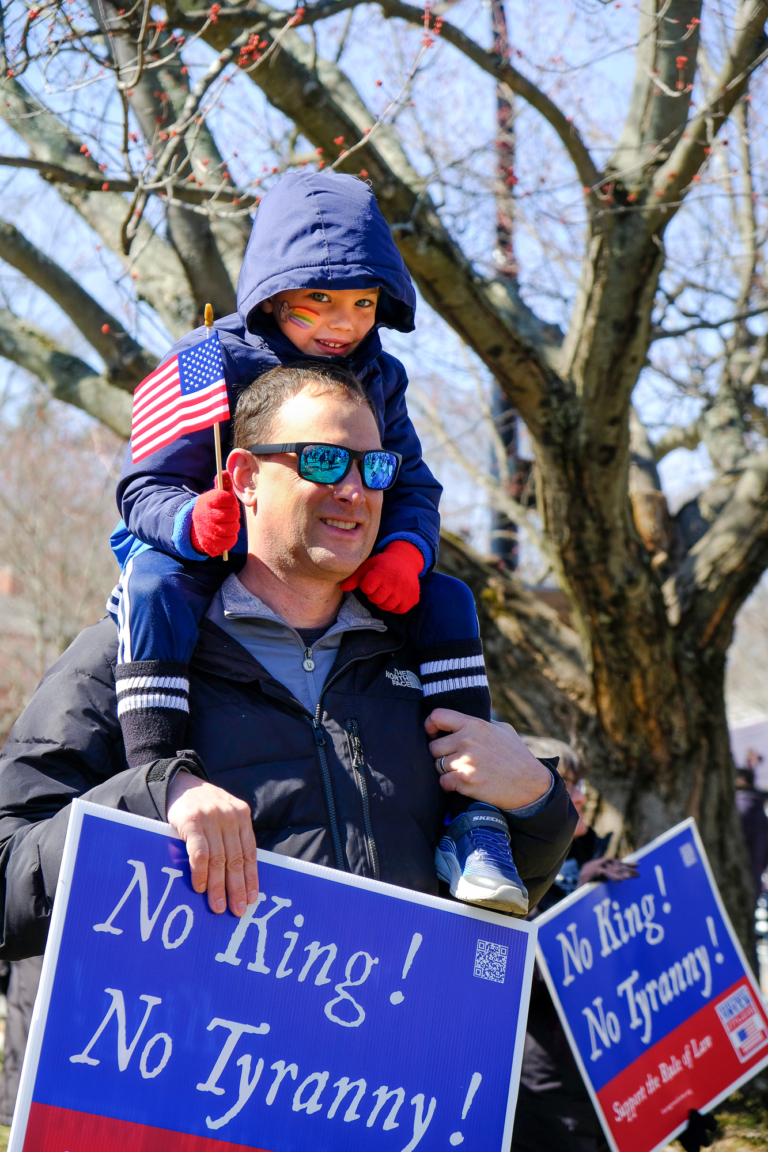
    Nearly 2,000 people came to the Lexington Visitor’s Center, across from the Battle Green, on March 28, part of the largest single-day protest in American history. Nationally No Kings had more than 3,100 events nationwide, with an estimated 8 million participants, including 180,000 in Boston.

    Lexington Alarm and IndivisibleLAB held the rally in Lexington, after it became apparent that many wanted one here, as has been done 3 other times this past year. Of course, Lexington is among the most fitting locations. “The Battle of Lexington and Concord was here,” one eighth-grade resident told the Lexington Observer. “It was the first place where we took our stand against kings. And I feel like we’re doing that again.”

    Toby Sackton opened by naming the stakes directly. “We are not just fighting for survival, but for the rebirth of our Constitution and its promise.”

  • |

    Profiles in Courage

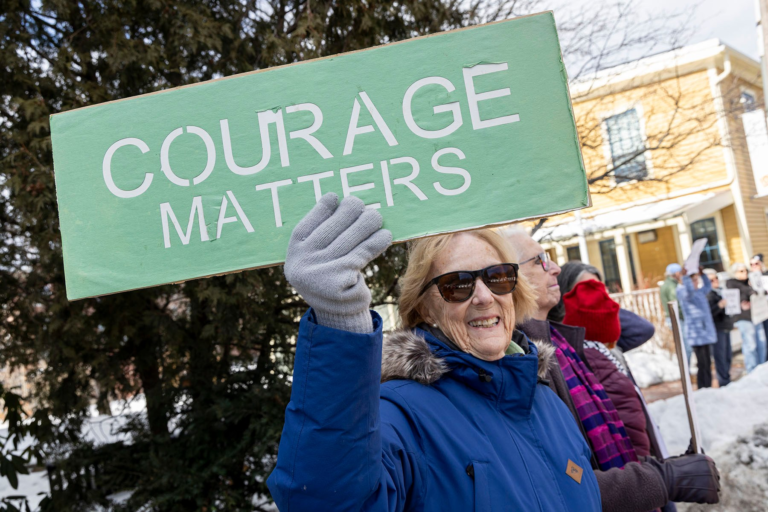
    At Lexington Alarm we have a theory of resistance. When people have courage to take small actions they generate a response. No action is too small or insignificant not to count. Sometimes the responses strengthen the resistance in surprising ways. This creates a snowball effect, and the resistance to abuses and attacks on our constitutional rights grows stronger.

    We have two really important examples from the past two weeks.

  • |

    ICE Supporters Try and Suppress Bearing Witness Demonstrations

    The weekly Bearing Witness protests at ICE headquarters on District Avenue have become a regional center of peaceful resistance, drawing 700–900 participants each week. Organized by a broad interfaith coalition, the demonstrations elevate the voices of those harmed by ICE while reaffirming a commitment to nonviolence. That very commitment has triggered escalating efforts to suppress the protests: parking bans, intimidation, and towing by powerful real estate interests and complicit local authorities. As businesses and police “bend the knee” to protect ICE, Bearing Witness remains resolute. Peaceful assembly is not a threat—it is a constitutional right, and it will continue to grow. See our Letter to National Development

  • |

    We Are All Minneapolis

    Alex Pretti, a 37 year old nurse known by neighbors as an amiable man in his neighborhood was murdered by federal ICE agents today in Minneapolis.

    Alex was not the target of any investigation. He was using his iphone to film the violent threats of ICE agents in the street, and he was talking to another woman filming the scene. ICE agents approached him and the woman, wrestled him to the ground, and after he had been subdued one agent took out a gun and fired up to ten shots killing him. His last words, to the woman who was pinned to the ground near him as they were pepper sprayed, were “all you alright?”

    We are at war. No sense mincing words. Until we tear the present DHS agency down to the ground and start with a new structure, no one in America is safe.

  • Lexington Alarm!’s New Research on Shutting Down ICE Flights at Hanscom Field

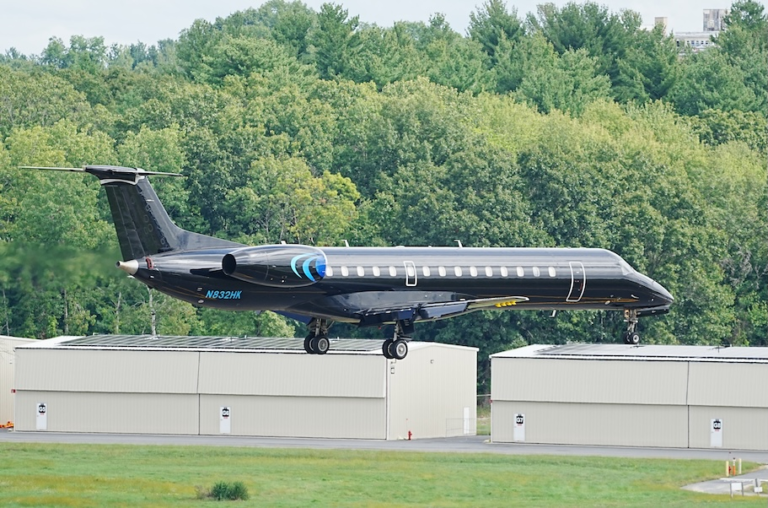
    Lexington Alarm! has completed a research project on how Hanscom field was developed as an airport for small regional airplanes only, and how the use of large planes there by ICE may be illegal under Massachusetts laws and regulations. Use of Hanscom by commercial air service is limited to airplanes with 60 seats or less, and the ICE charters are clearly in violation of this.

  • 2 Ice Planes Land Same Day at Hanscom

    When Hanscom Airfield was first taken over by Massport, there was immense community opposition in Lexington, Concord, and surrounding towns because people did not want a major second Boston airport, as the infrastructure to support it was non-existent and it also would have changed the character of the Minuteman National Park, nearly an abutter.

    The result was a compromise for a small regional airfield, where jets of more than 60 seats would not be allowed. This agreement, limiting commercial airlines to 60 seats, was codified into law in the act enabling Massport to acquire the airport in 1980. The FAA sued, saying that FAA rules preempted local airport authorities from restricting operations in this way. Massachusetts won.