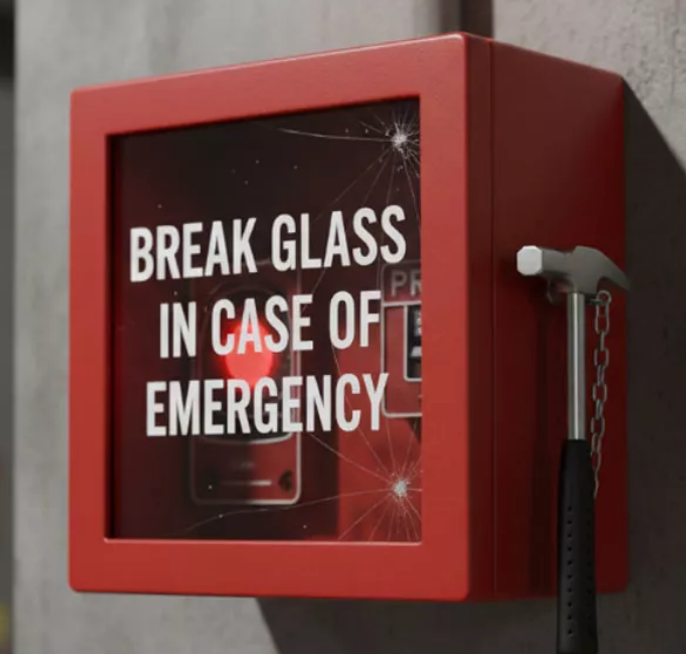
In an Emergency, Break Glass
Imagine this scenario after November 3rd. Democrats have exceeded expectations and seem to be on the verge of winning 52 seats in the Senate, after taking the house with a substantial majority. But it is November 5th, and Michigan’s county canvass has just begun, with El-Sayed ahead by only a few thousand ballots and a recount looming.
Pennsylvania Democratic senator John Fetterman, known to be erratic, announces that he is switching parties and becoming a Republican as he will not be in the same party as El-Sayed. Then Mike Rogers, the losing Republican Candidate, calls on the Justice Department to seize ballots in Detroit, on the false grounds of massive dysfunction in the voting machine tabulation of paper ballots. With a preplanned strike that night, federal agents seize the sealed ballot containers held by the Detroit clerk for the canvass. When an injunction overturns their action on Nov. 6th, as many as 15,000 paper ballots appear to have gone missing, about 30% of the absentee ballots they took.
El-Sayed’s victory appears threatened. With Vice President Vance to break ties, Republicans will retain control of the Senate at 50-50 if the missing ballots are not counted.
What would you do on Saturday, November 7th, as this development appears to be solidifying.
This, or something similar, is the nightmare scenario of disruption in our 2026 election. It could be refusal to certify, or refusal to seat newly elected members when the new Congress convenes on January 3rd. Michigan has closed the first of those doors since 2022 (certification there is a duty, not a choice), which is why the threat there would come from Washington. Given Trump’s history of lawlessness, his disdain for democratic institutions, and his flirtation with calling a national emergency, we have no guarantee of regular order if his actual defeat appears at hand.
As a result of this unpleasant reality, pro-democracy organizations and institutions have been mobilizing to protect the integrity of the election results after the election wherever and in whatever way they may be threatened.
Part of this mobilization is poll watching and making sure of a robust response to voter intimidation on election day. Part of this is preparing legal observers, and teams of lawyers ready to file for injunctions in any district where it is necessary.
And part of this is each of us preparing in our minds and hearts our collective response, if, unfortunately, one is called for.
All of us hope for a normal election night, and normal tabulation over the next few days after the election. But what are our options if that does not happen.
The organizers of the No Kings Movement and 50501 have studied instances where authoritarian threats to elections were successfully repelled. In multiple cases, that has depended on massive popular mobilization.
They have called on us to think about this prior to November 3rd, in hopes we will never be put in that situation.
The three elements we need to prepare for are first, what would be the appropriate response and form of it? Second, who would call out such a mass mobilization and how would people join in? And third, can it be sustained for one to two weeks to force the government to back down?
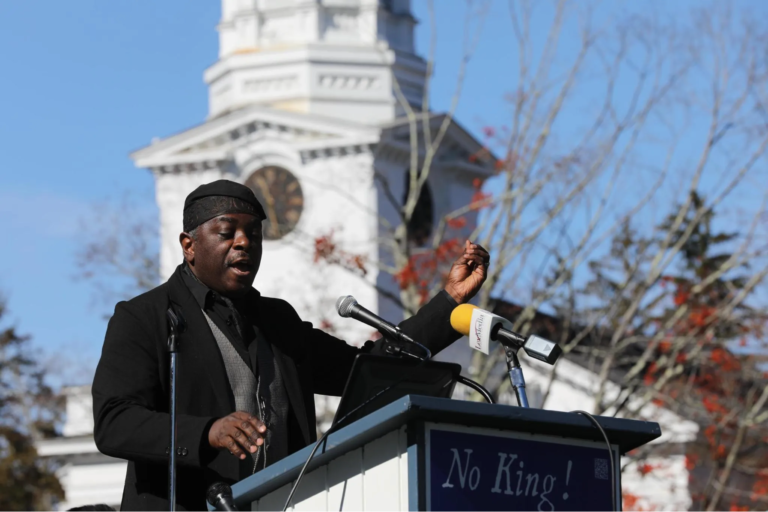
We have had massive rallies against tyranny and authoritarianism called by the No Kings movement over the past 24 months. 3 million turned out in April, 2025. 5 million turned out in June of 2025, and nearly 7 million in October 2025. In March of 2026, the total was 8 to 9 million people, 2.3% of the US population.
In the event of an attack on election integrity, we will need our 7 million turnout and more. But not for just rallies, but for something that can be sustained over a period of time and grow. Something that would involve unions shutting down workplaces and going on strike. It would involve businesses and universities closing in protest. It would involve expressions of popular will to defend our democratic institutions with powerful allies within and outside of the government. We would have to knock down the pillars of authoritarianism one by one until the whole anti-democratic effort collapsed.
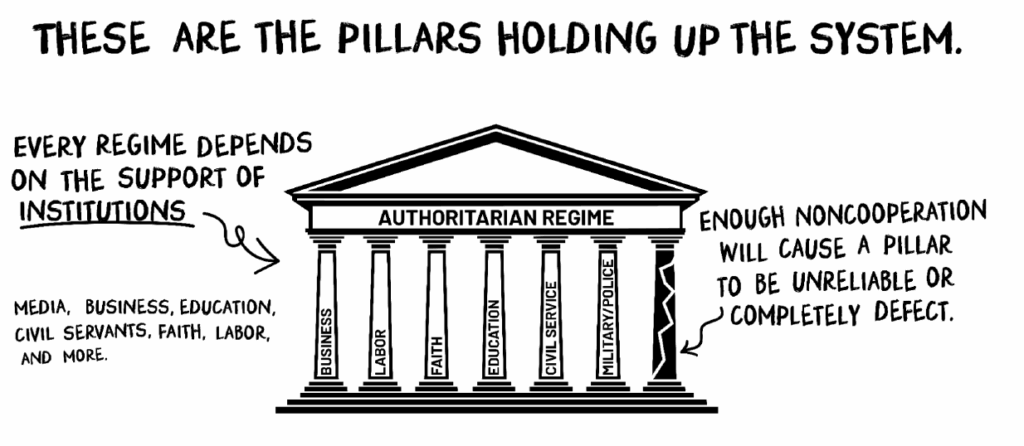
If these actions were necessary we expect the call would come from our unified national leadership in the No Kings movement.
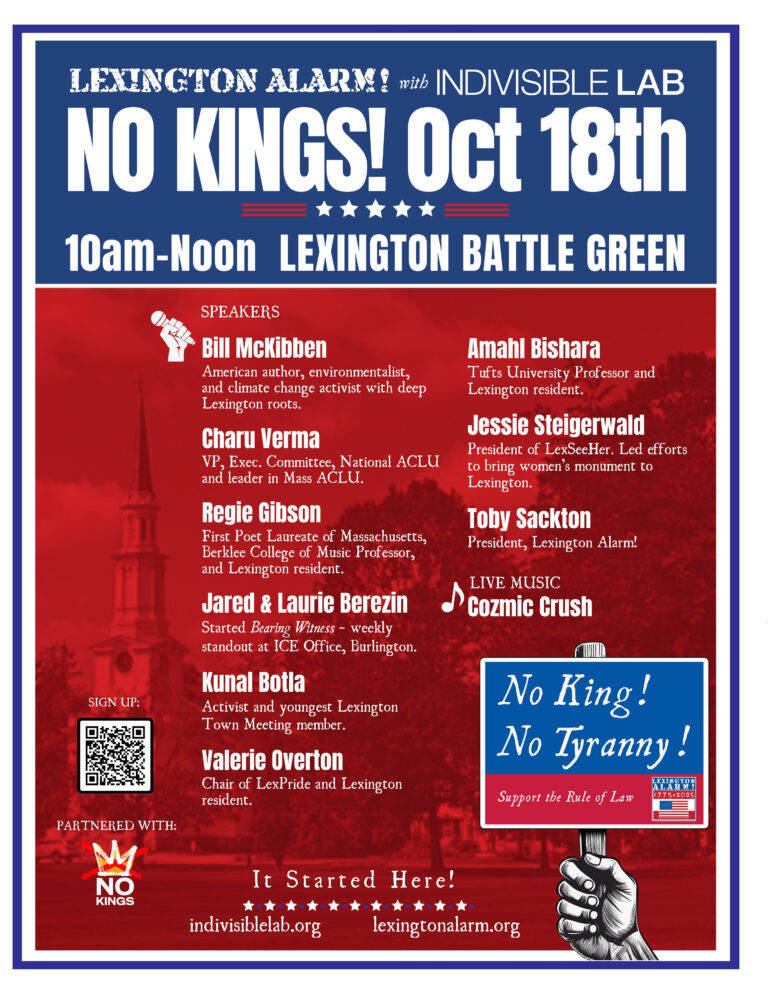
People would join in their communities, just as we have before. The strength of this movement is its decentralization. We are not calling on everyone to march to DC, we are calling on people to defend democracy where they are if it is ever needed. At our October 17th No Kings Vote Early event in Lexington, we will have information about how such mobilizations might occur and how to think about these possibilities.
The traditional way to sustain this activity is to embark on non-cooperation. To not go to school or work; to join with your community for something more important. In Minneapolis during the ICE surge, it was three weeks of escalating strikes and shutdowns, including a statewide general strike, that preceded the federal withdrawal and gave the neighborhood groups the ability and conviction to drive ICE out of their city. In a national emergency, we may have to face similar levels of potential disruption.
Right now our focus is on elections: getting out the early vote and mail vote in such overwhelming numbers that disruptions on election day will be minimized. It’s on recruiting poll watchers and making sure that everyone who wishes to vote on election day can do so easily and safely. And if we are lucky, the results will make the election “too big to rig” as the sign I saw driving to New Hampshire said splayed across the highway.
But each of us has the responsibility to ask ourselves what if we are faced with a situation like the 2000 election where Republican operatives successfully manufactured a riot in Miami to stop the vote counting. Like pulling a jenga block, halting that count and removing the decision from Florida to the supreme court contributed to the erosion of our democracy. Then we had more serious blows, like a stolen Supreme court seat, and then January 6th. Our democratic structure is much more fragile. So we need to think through what is at stake, not to be scared, but to be ready, and recognize we are the majority, and we will find a proper way to express our commitment to democratic change.