The Speeches of Lexington No Kings Day, March 28
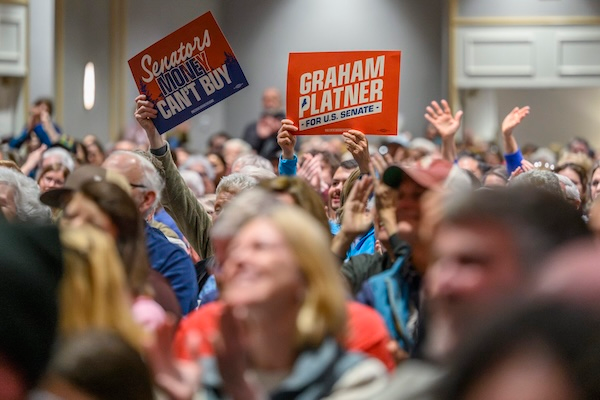
Nearly 2,000 people came to the Lexington Visitor’s Center, across from the Battle Green, on March 28, part of the largest single-day protest in American history. Nationally No Kings had more than 3,100 events nationwide, with an estimated 8 million participants, including 180,000 in Boston.
Lexington Alarm and IndivisibleLAB held the rally in Lexington, after it became apparent that many wanted one here, as has been done 3 other times this past year. Of course, Lexington is among the most fitting locations. “The Battle of Lexington and Concord was here,” one eighth-grade resident told the Lexington Observer. “It was the first place where we took our stand against kings. And I feel like we’re doing that again.”
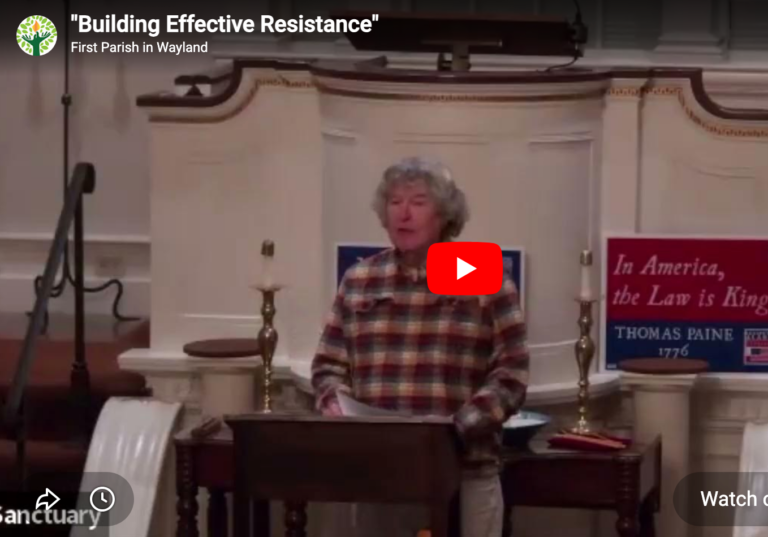
Toby Sackton opened by naming the stakes directly. “We are not just fighting for survival, but for the rebirth of our Constitution and its promise.” Lincoln at Gettysburg asked whether a government of, by, and for the people could long endure, or would perish from the earth. “That question is before us again, right now, in our time, right here,” said Sackton. “No Kings is our answer.” He closed with a line that reporters picked up: “Fear is the weapon of authoritarians. Trust is the weapon of the resistance.”
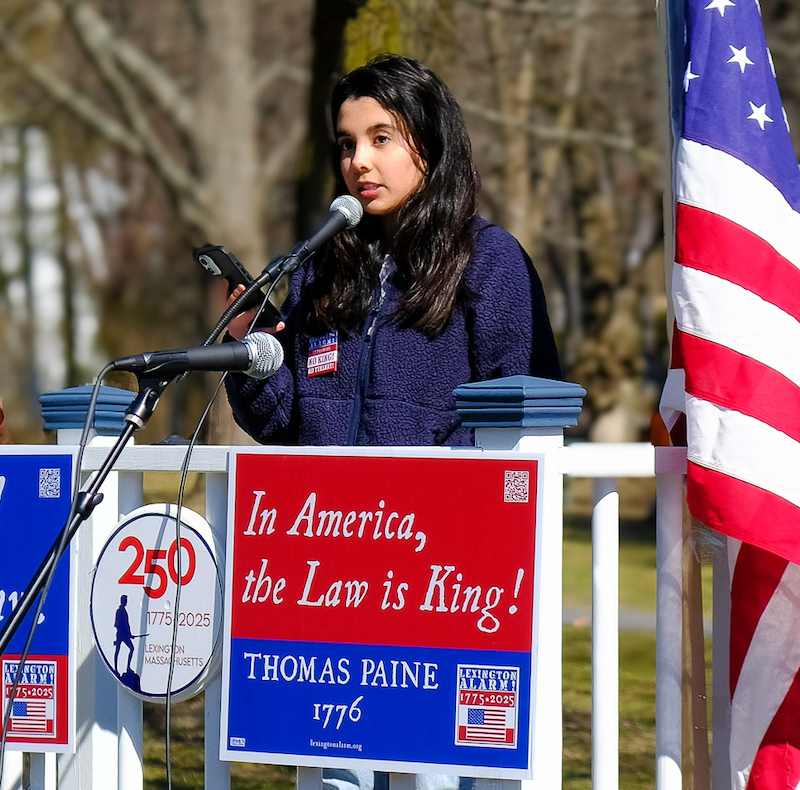
The highlight of the rally were the two Lexington High School juniors Layla Farnham and Ayla Modirzadeh-March, who had organized hundreds of students in a walkout against ICE on March 9th. Layla described what she saw when she turned around at the end of that march: varsity athletes standing beside first-chair musicians, seniors walking with freshmen. “I had never seen anything like it.” Her motivation was personal and specific: she has Mexican, Indian, Chinese, and Moroccan family members, and a nine-year-old cousin who has cried from fear of deportation. Ayla, who is part-Iranian, reached back to Alexander Hamilton. He was born into poverty on a Caribbean island, yet became an author of the federalist papers and the Constitution. Ayla quoted Hamilton to make a clean argument: resisting injustice isn’t un-American. It is precisely American.
Dr. Savina Martin of the Massachusetts Poor People’s Campaign and a U.S. Army veteran, then spoke. She connected Lexington’s resistance to a national struggle for survival, and referenced Langston Hughes’ poem Let America be America Again. “Everybody in and nobody out. We are not going to take it anymore.”
Youth turnout was real. Cozmic Crush bassist Delia Tsouvalas, a senior at LHS, noted that third quarter had just ended and that political posters at LHS require a teacher’s signature to go up. Lead vocalist Riley Kee went further: “A lot of youth aren’t here because they’re scared. Scared of being cringey. Scared of being the woke kid.” Both students were on stage performing. The LHS walkout organizers were at the microphone. The band closed the rally. The kids who came showed up fully.
Among those who did attend were people for whom the stakes were not abstract. One local author and immigrant, whose Jewish parents fled Europe and came to New York when she was nine months old, told the Lexington Observer she had been active in the Civil Rights movement since age 14, and that what drove her now was the same thing: “optimism and outrage.” A Cambridge resident said she crossed the town line specifically because Lexington is a symbolic place — “we fought back in 1775, and we need to do it again.”
The program closed with community singing led by Jan Maier and Sarah Higginbotham — “Hold On” and “One Foot in Front of the Other” — simple enough to learn in minutes, built to be carried into other rooms.
At noon, about 75 people boarded Lexington Alarm buses to the Boston Common, where they mustered near Kings Chapel, and marched to the common with a large banner, stopping tourists and getting cheers from the No Kings crowd that filled the Common.